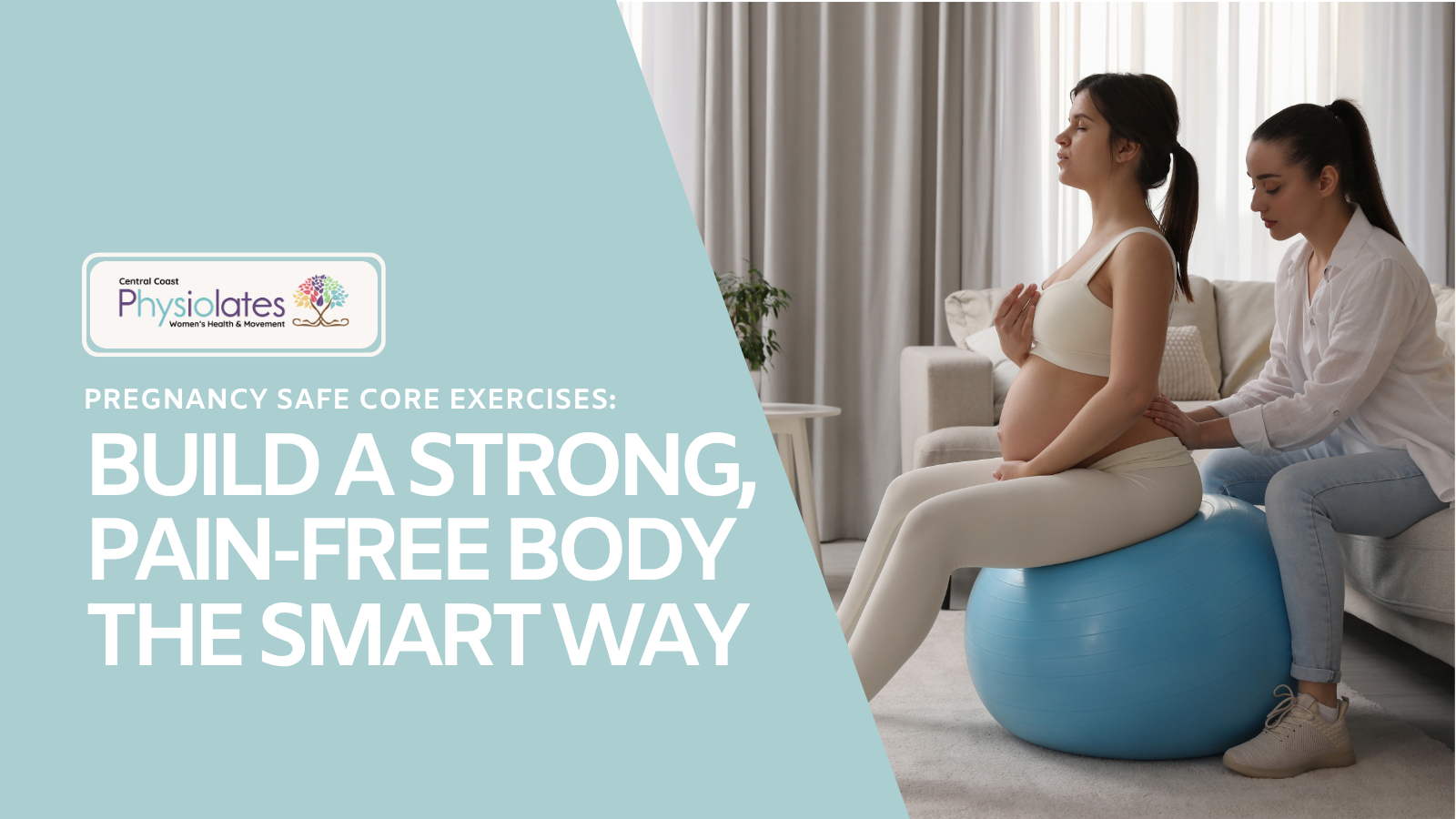
Pregnancy Safe Core Exercises: Build a Strong, Pain-Free Body the Smart Way
Dec 04, 2025Pregnancy changes everything: your posture, your strength, even your sense of balance.
And while those changes are completely natural, they can also bring challenges such as back and pelvic discomfort.
For many women, this stems from either low back pain (LBP) or pelvic girdle pain (PGP), which require different approaches to treatment and movement.
Through the right pregnancy-safe core exercises, you can support your body’s changes and feel stronger, more stable, and more confident throughout your pregnancy.
Key Takeaways
- Around 50% of pregnant women experience back or pelvic discomfort.
- The source is often low back pain (LBP) or pelvic girdle pain (PGP), so identifying which one you have is essential.
- Safe, targeted core stabilisation can reduce symptoms and improve functional strength.
- Activating your deep core canister, including the Transversus Abdominis (TrA) and Pelvic Floor Muscles (PFM), is vital for pelvic and spinal stability.
- Gentle, consistent exercises can help reduce joint pressure and support recovery after birth.
Why Safe Core Exercises Matter During Pregnancy
Your core is more than just your abdominal muscles. It’s your body’s internal support system for your spine, pelvis, and baby.
During pregnancy, hormonal changes, soften the ligaments and increase joint mobility.
While these adaptations are important for birth, they can also make the pelvic joints less stable, which may lead to pain or discomfort.
If you’re experiencing this, a pregnancy physiotherapy assessment can help determine whether your symptoms come from pelvic girdle pain or low back tension, and guide you toward safe, effective exercises.
Low Back Pain vs. Pelvic Girdle Pain: Understanding the Difference
Not all discomfort feels the same, and recognising the type of pain you have is key to managing it effectively.
| Pain Type | Location | Triggered By | Recommended Focus |
|---|---|---|---|
| Low Back Pain (LBP) |
Higher up, above the bony ridges of your pelvis |
Bending, arching, sitting for long periods | Gentle strengthening and mobility-based movements |
| Pelvic Girdle Pain (PGP) |
Around the pubic bone or sacroiliac joints |
Walking, climbing stairs, turning in bed, single-leg movements |
Stability and symmetry-focused exercises |
Some women experience a combination of both, known as Lumbopelvic Pain (LPP). This often benefits from a balance of mobility and stabilisation training.
Working with a pelvic health physiotherapist can help identify the main source of discomfort and ensure your exercise plan supports both stability and recovery.
The Deep Core Canister: Your Built-In Support System
Your deep core canister acts like an internal brace that supports your growing abdomen.
It includes:
- Transversus Abdominis (TrA): the deep “corset” muscle that stabilises your spine and pelvis.
- Pelvic Floor Muscles (PFM): the base that controls intra-abdominal pressure and supports pelvic joints.
- Diaphragm and Multifidus: muscles that connect breathing with posture and movement.
When these components work together, they create harmony between your spine and pelvis, improving support, comfort, and strength.
You can learn more about safe, guided activation through our core and pelvic floor rehabilitation programs designed for pregnancy and postnatal recovery.
Top 10 Pregnancy-Safe Core Exercises
Exercise 1: Deep Core Activation (Transversus Abdominis Isolation)
This foundational exercise helps retrain your body to engage the correct muscles before movement.
How to do it:
- Lie on your side or sit upright.
- Exhale gently and imagine drawing your belly button inward toward your spine.
- Keep breathing naturally — avoid holding your breath.
- Hold for 10 seconds, repeat 10–15 times, and aim for 2–3 sets per day.
This movement teaches your Transversus Abdominis to engage automatically, protecting your back and pelvis during everyday activities.
Exercise 2: Pelvic Floor Muscle Training (PFMT)
Your pelvic floor forms the foundation of your core.
It provides support for your pelvic organs, stabilises the pelvis, and assists with posture.
How to do it:
- Imagine stopping the flow of urine and wind at the same time, that’s your pelvic floor lifting.
- Avoid squeezing your glutes or tensing your thighs.
- Alternate slow holds (10 seconds) with 10 quick squeezes.
- Perform 2–3 sets, several times a day.
When coordinated with breathing, this exercise enhances core stability and helps manage intra-abdominal pressure.
Exercise 3: Pelvic Tilt (Supine or Seated)
The pelvic tilt is a gentle movement that builds awareness of spinal posture and relieves stiffness.
How to do it:
- Sit or lie with knees bent and feet flat.
- Slowly tilt your pelvis forward (arching your back), then backward (flattening your lower spine).
- Keep your range small and comfortable.
- Complete 10 repetitions, 1–2 times per day.
This motion helps you find your neutral spine and prepares your body for more advanced stabilisation work.
Exercise 4: Cat-Cow Stretch
This simple movement maintains flexibility while improving spinal mobility.
How to do it:
- Begin on hands and knees.
- As you exhale, round your spine upward (Cat).
- As you inhale, let your belly soften and gently arch your back (Cow).
- Repeat 10 times slowly.
This exercise promotes sacral mobility, supports relaxation, and helps prepare the pelvis for labour.
Exercise 5: Gluteal Bridge with Pelvic Floor Activation
This is one of the most effective pregnancy safe core exercises for stabilising the pelvis and strengthening the glutes.
How to do it:
- Lie on your back with knees bent and feet hip-width apart.
- Engage your Pelvic Floor and Transversus Abdominis.
- Lift your hips slowly, pressing through your heels.
- Hold for 5 seconds, then lower gently.
- Perform 3 sets of 10 repetitions.
This movement strengthens your posterior chain and provides external stabilisation to the sacroiliac joints (SIJs), supporting pelvic alignment.
Exercise 6: Pillow Squeeze (Inner Thigh Isometrics)
This simple yet powerful move targets your inner thighs, key muscles that help stabilise the pelvis and reduce strain around the pubic symphysis.
How to do it:
-
Sit or lie with knees bent.
-
Place a soft pillow or small ball between your knees.
-
Gently squeeze, activating the inner thigh muscles.
-
Hold for 5 seconds, relax, and repeat 10 times for 2 sets daily.
This exercise supports joint compression and alignment, especially beneficial for pubic symphysis dysfunction or feelings of pelvic instability.
Exercise 7: Quadruped Hip Extension
This exercise strengthens the gluteal muscles in a safe, low-load position, reducing pelvic stress.
How to do it:
-
Begin on hands and knees, spine neutral.
-
Engage your Transversus Abdominis (TrA) gently.
-
Lift one knee slightly, squeezing through your glute.
-
Avoid arching your back or rocking your hips.
-
Perform 3 sets of 10 repetitions on each side.
This movement improves posterior chain strength and pelvic control, helping you walk and move with better stability.
Exercise 8: Modified Child’s Pose
This restorative stretch helps release lower back and hip tension while keeping the pelvis comfortable and supported.
How to do it:
-
Kneel with your knees wide and your big toes together.
-
Sit back towards your heels, reaching your arms forward.
-
Rest your chest and head on a cushion or yoga block.
-
Hold for 30 seconds, breathing deeply, and repeat 2–3 times.
This position gently decompresses the spine and promotes relaxation after core or gluteal work.
Exercise 9: Modified Standing Toe Taps
This functional movement helps your body integrate stabilisation into daily tasks such as walking or getting up from a chair.
How to do it:
-
Stand tall, soft knees, core engaged.
-
Slowly tap one foot forward, keeping hips level.
-
Return to standing and repeat to the side or back.
-
Perform 3 sets of 10 repetitions on each leg.
It’s an excellent way to train your core-glute connection while improving balance and stability.
Exercise 10: Inner Thigh Relaxation Stretch
Tight inner thighs can contribute to pelvic discomfort and reduced hip mobility.
This gentle stretch improves flexibility and prepares your body for labour.
How to do it:
-
Sit at the edge of a chair or therapy ball with feet apart.
-
Gently press your knees outward until a mild stretch is felt.
-
Hold for 5–10 seconds, repeat 4–5 times.
This helps maintain pelvic mobility and reduces tension in the hip adductors.
⚠️ Safety Tip
After the first trimester, avoid lying flat on your back for long periods. If you experience discomfort or dizziness, switch to a side-lying or seated position.
If you’re unsure how to modify safely, book a Women’s Health Assessment for tailored advice.
Adapting Your Core Exercises by Trimester
As your pregnancy progresses, your centre of gravity shifts, and your joints become more mobile.
Adapting exercises for comfort and safety is essential.
| Trimester | Focus | Adaptations |
|---|---|---|
| First Trimester | Core awareness & gentle activation | Focus on breathing, posture, and foundational control. |
| Second Trimester | Support and stability | Avoid prolonged lying flat; choose seated or side-lying positions. |
| Third Trimester | Comfort and function | Prioritise gentle, supported movement and posture alignment. |
If you’re unsure how to modify your routine, a pregnancy physiotherapy consultation can help design trimester-specific movements that protect both you and your baby.
Managing Diastasis Recti (Abdominal Separation)
As the abdomen expands, it’s normal for the connective tissue between the abdominal muscles (the linea alba) to stretch. When this gap widens beyond normal, it’s called Diastasis Recti (DR).
To protect your core:
- Avoid high-pressure movements such as crunches, planks, or double leg lifts.
- Focus on TrA and pelvic floor activation instead.
- Monitor your abdominal wall, if bulging or doming appears, stop and modify.
High intra-abdominal pressure or incorrect exercise technique can worsen separation.
For guidance on safe activation and postnatal recovery, visit our pelvic health physiotherapy page for tailored support.
When to Seek Professional Support
Even with regular movement, you may notice ongoing symptoms that need individualised care.
Seek professional guidance if:
- Pain or instability continues despite gentle exercise.
- You feel pelvic heaviness or pressure.
- Everyday activities (walking, stairs, rolling in bed) trigger discomfort.
- You’re unsure whether you’re engaging your core correctly.
This is when working with a women’s health physiotherapist can make all the difference.
They’ll assess your posture, breathing, and deep core engagement to reduce strain and restore confidence.
How Central Coast Physiolates Can Help
At Central Coast Physiolates, we help women across New South Wales manage pregnancy-related back, pelvic, and core issues with confidence and clarity.
Our Pregnancy Physiotherapy programs combine hands-on treatment with safe, targeted movement plans.
We also offer pelvic floor physiotherapy and postnatal recovery support to help you feel stronger and more stable after birth.
If you’re struggling with:
- Pelvic girdle pain or pubic symphysis dysfunction
- Low back discomfort during pregnancy
- Abdominal separation (Diastasis Recti)
- Or difficulty activating your core safely
…our physiotherapists can help you regain control through:
- Targeted manual therapy to reduce joint irritation and restore alignment.
- Tailored exercise programs based on your stage of pregnancy and clinical needs.
- Pelvic floor re-education and core activation techniques.
- Education and movement strategies to make everyday activities easier and safer.
We work closely with your healthcare team to ensure your care is integrated, empowering, and focused on lasting strength and wellbeing.
Book your personalised Women’s Health Assessment today at Central Coast Physiolates. Let’s create a plan to stabilise your core and move through pregnancy with greater ease and confidence.
FAQs
1. Are these core exercises safe for all trimesters?
Yes, with proper modification. Avoid prolonged supine positions and high-load exercises, especially as pregnancy progresses.
2. Can safe core exercises prevent pelvic pain?
They can’t always prevent it, but consistent stabilisation work can significantly reduce pain intensity and improve daily movement.
3. What if I feel pressure or pain while exercising?
Stop immediately and modify the exercise. Consult a women’s health physiotherapist to assess your technique and adjust your plan.
4. Do these exercises help with postpartum recovery?
Yes, these movements form the foundation for safe postnatal rehabilitation and rebuilding pelvic and core strength.
Conclusion
Pregnancy safe core exercises are about more than fitness, they’re about protecting your body as it adapts.
By focusing on stabilisation, breath, and gentle activation, you can build strength and reduce the stress on your spine and pelvis.
And if your symptoms persist, professional physiotherapy support can help you identify the root cause, restore control, and guide your recovery safely.
At Central Coast Physiolates, we’re here to help you move comfortably, confidently, and with expert support at every stage of pregnancy and beyond.
💡 Disclaimer: This article is for educational purposes only and based on clinical evidence from physiotherapy practice.
Your Body Changes. Your Care Should Too.
From pregnancy and postnatal recovery to pelvic health, menopause and beyond, your body deserves care that makes sense for where you are now.
Join the Central Coast Physiolates newsletter for practical education, helpful resources and thoughtful guidance to help you better understand your body and feel more confident in your movement and health.
Your journey is important, and we'll never share your information.