Why Kegels Alone Often Don't Work...And What Your Pelvic Floor Actually Needs
Mar 13, 2026You've been doing your Kegels. You're still leaking. You're not failing. The approach is incomplete.
If you've been told to "just do your Kegels" and you're still leaking, feeling heavy, or unsure if you're doing them correctly. Kegels can be a useful part of rehabilitation.
But pelvic floor function isn't something your body uses in isolation. In real life, your pelvic floor works as part of a pressure and movement system.
The Pelvic Floor Is Reflexive, Not a "Manual Muscle"
Most of the time, you shouldn't be thinking about your pelvic floor at all. It's designed to respond automatically, when you cough, sneeze, laugh, lift something heavy, change direction, jump, run, urinate, birth a child, or have an orgasm. It works with your breath and your core to manage pressure and support your body throughout your day.
That response is coordinated through your nervous system. Which is why isolated squeezing, especially lying down, without breath, without load, without movement, often doesn't translate into real-life improvement.
How Pregnancy Changes Your Body's Pressure Strategy
Pregnancy doesn't just stretch tissues. It changes the way your entire body manages pressure. Your ribcage position shifts, your posture adapts, your abdominal wall lengthens and must manage load differently, and your pelvic floor experiences different resting pressures.
Your nervous system learns that pattern, and it becomes your new normal. So if we add isolated contractions on top of a strategy that's already mismanaging pressure, we may not change the outcome. This is especially true for women experiencing pelvic floor dysfunction after birth.
Why Gravity Matters: Lying Down vs. Standing Up
Your pelvic floor behaves differently under load. When you're lying on your back, it's relatively unloaded, pressure distribution changes and muscles sit at a different resting length. When you stand up, gravity increases the demand, resting length shifts, and reflex timing becomes more important.
Many symptoms show up upright, not lying down. That's why movement-based assessment and retraining, rather than floor-based exercises alone, is central to effective women's health physiotherapy on the Central Coast.
Not sure if your pelvic floor is overactive, underactive, or just poorly timed? That's exactly what a pelvic floor assessment is for.
Book at Holgate →Kegels Aren't Always the Answer...Here's Why
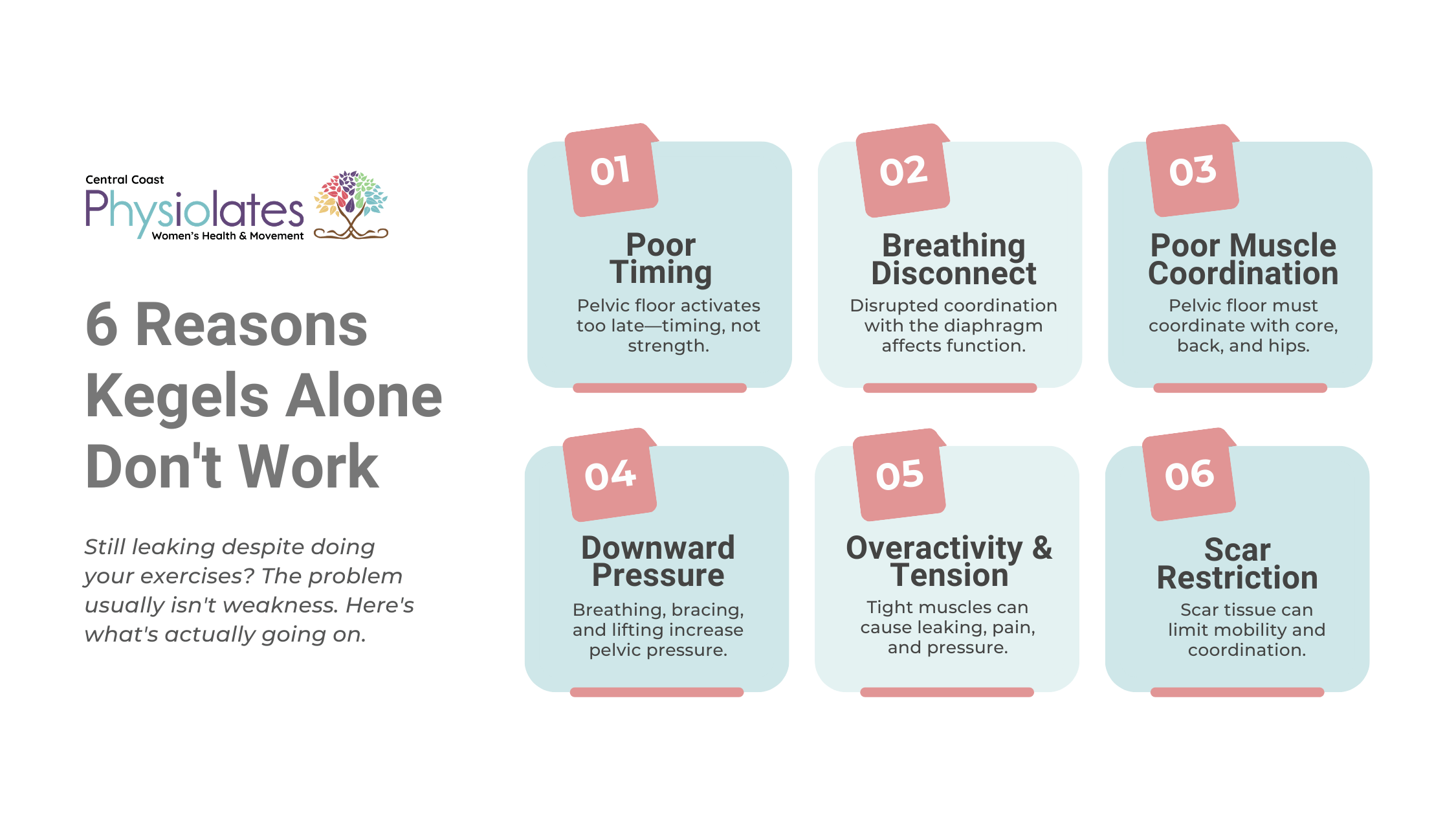
A common misconception is that every pelvic floor problem is caused by weakness. In reality, the issue is often something else entirely.
|
1
Poor Timing
The pelvic floor may activate too late, after the cough, after the jump, after the load. Strength isn't the problem; timing is.
2
Poor Coordination with Breath
The pelvic floor works in relationship with the diaphragm. If that coordination is disrupted, isolated squeezing won't restore normal function.
3
Poor Coordination With Other Muscle Groups
The pelvic floor works in co-contraction with the deep abdominals, back, and hip muscles. Disruption here affects function regardless of strength.
4
Excessive Downward Pressure
How you breathe, brace, lift, and move determines how much pressure your pelvic floor must manage, even when muscles are strong.
5
Overactivity or Excess Tension
Sometimes the pelvic floor doesn't relax well. Overactive muscles contribute to leaking, pain, pressure, and difficulty emptying, none of which improve with more squeezing.
6
Scar Restriction After Birth or Surgery
Scar tissue from birth or caesarean section can restrict tissue mobility and affect coordination. Read more about C-section recovery → |
What Effective Pelvic Floor Rehabilitation Actually Looks Like
Because pelvic floor problems can arise for many different reasons, effective rehabilitation begins with a thorough assessment, not immediately prescribing exercises, and not simply recommending Kegels.
|
1
|
Understanding the Whole System
We assess how the pelvic floor behaves alongside the diaphragm, abdominal wall, spine, and pelvis during breathing, posture, and movement, including fascia, scars, and pelvic organ mobility. |
|
2
|
Breathing and Relaxation
For some people, the first step is improving the relationship between breathing and pelvic floor movement. If relaxation is limited, attempts to strengthen can increase tension rather than improve function. |
|
3
|
Timing and Coordination
We retrain when and how the pelvic floor activates, particularly during effort, movement, coughing, lifting, and impact. |
|
4
|
Load Integration and Functional Strength
Strength is developed in the way the body actually uses it, squats, lifting patterns, functional tasks, and graded return to impact where appropriate. |
|
5
|
Real-Life Transfer: No More Thinking About It
The goal is for the pelvic floor to respond automatically during everyday activities, without you having to consciously think about it. |
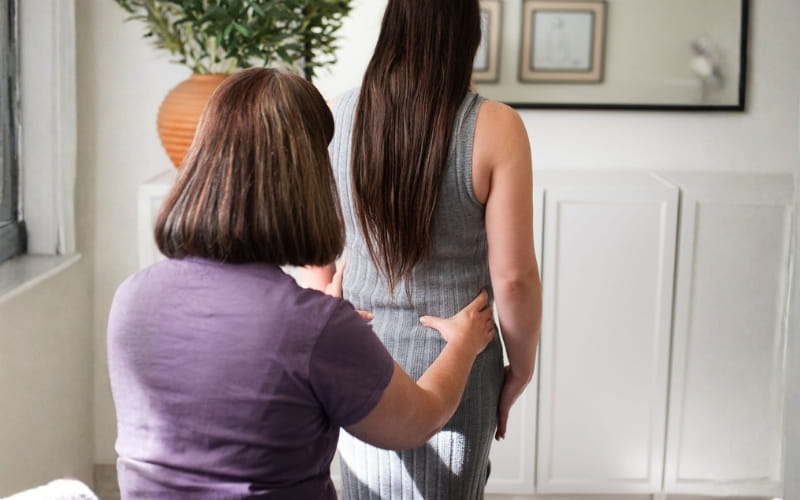
Signs You'd Benefit From a Pelvic Floor Assessment
Consider a pelvic floor assessment if you're experiencing any of the following:
Experiencing any of the above? A pelvic floor assessment is your best next step.
Book with Tara at Holgate →
So… Should You Do Kegels?
Sometimes — but rarely as the only strategy, and rarely as a maximal squeeze. The right starting point depends on assessment: muscle tone, timing, coordination, pressure management, scar influence, and your individual goals.
Effective pelvic floor rehabilitation is about restoring function across the whole system, not simply strengthening one muscle.
What to Expect From a Pelvic Floor Assessment at Physiolates
A pelvic floor assessment at Physiolates goes well beyond isolated muscle testing. Tara will assess how your pelvic floor functions within your whole pressure and movement system — including your breath, posture, load tolerance, and any scar or tissue restrictions.
The assessment is unhurried, thorough, and entirely individualised. You'll leave with a clear understanding of what's happening in your body and a plan that's specific to you — not a generic exercise sheet.
Appointments are available at our Holgate clinic on the Central Coast, NSW. Whether you're six weeks postnatal or years down the track, it's never too late to get a proper assessment.
Ready for a Plan That Actually Works for Your Body?
At Central Coast Physiolates in Holgate, we assess function under real-life demands — breath, posture, load, movement, and capacity.
If you're on the Central Coast and want a pelvic floor plan that fits your life, we're here whenever you're ready.
Your Body Changes. Your Care Should Too.
From pregnancy and postnatal recovery to pelvic health, menopause and beyond, your body deserves care that makes sense for where you are now.
Join the Central Coast Physiolates newsletter for practical education, helpful resources and thoughtful guidance to help you better understand your body and feel more confident in your movement and health.
Your journey is important, and we'll never share your information.