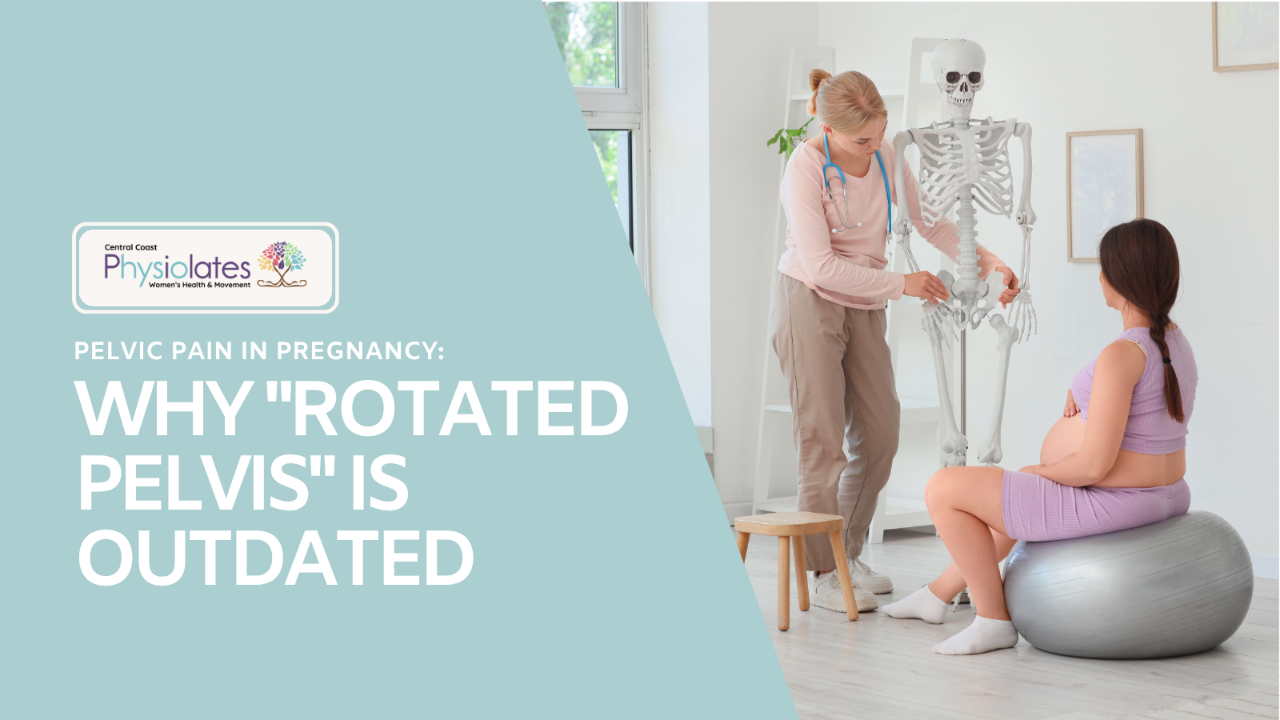
Pelvic Pain in Pregnancy: Why "Rotated Pelvis" Is Outdated
Nov 03, 2025Pregnancy is a time of incredible change: physical, hormonal, and emotional. But for many women, it can also bring an unexpected challenge, pelvic pain.
You might have heard someone say “your pelvis is out of alignment” or “your hips are rotated.”
While those explanations sound convincing, modern evidence tells a different story.
The truth? Your pelvis hasn’t “moved out of place.” It’s adapting, not misbehaving.
Key Takeaways
- The phrase “pelvis out of alignment” is outdated and not supported by evidence.
- Pelvic pain in pregnancy (often called pelvic girdle pain) is common and treatable.
- Pain is caused by sensitivity and coordination issues, not bones being “out.”
- Modern physiotherapy focuses on movement, strength, muscle balance and symmetry and confidence, not “realignment.”
- Gentle, consistent exercises and education can help you move more comfortably throughout pregnancy.
Understanding Pelvic Pain in Pregnancy
Around half of all pregnant women experience some form of pelvic girdle pain (PGP). It often shows up as discomfort around the pubic bone, across the sacroiliac joints, or into the hips and thighs.
PGP can worsen with:
- Rolling in bed
- Standing on one leg
- Walking up stairs
- Turning or twisting movements
These symptoms can vary in intensity but rarely mean something is “out of place.” What’s actually happening is that your pelvic joints are adapting to hormonal changes, ligament flexibility, and the increased load as your pregnancy progresses.
The Old Story: “Your Pelvis Is Rotated”
For decades, clinicians were taught that pelvic pain came from one side of the pelvis being “rotated” or “misaligned.” This idea, called the Positional Fault Hypothesis, suggested that small shifts in pelvic bones caused pain.
It led to statements like:
- “Your pelvis is out.”
- “One side is higher.”
- “Your sacrum is rotated.”
Although these phrases are still used regularly, they are now considered biomechanically inaccurate. Research shows the amount of movement in the pelvic joints is only about 2 to 3 millimetres, which is far too small to “rotate” or “dislocate.”
The Evidence Says Otherwise
Modern research has shown that pelvic pain is rarely linked to joint position.
- Palpation tests (feeling for asymmetry) are unreliable between practitioners.
- Imaging confirms small asymmetries are normal and not linked to pain.
- We discourage using “out of place” language altogether.
So your pelvis isn’t out; it’s simply working harder under new physical demands. That means care should focus on how it functions, not “putting it back.” If you’d like personalised support, a Pregnancy Physiotherapy session can help you strengthen safely at every stage.
The Modern View: Function, Not Position
Physiotherapists today understand pelvic pain through the ideas of form closure and force closure.
- Form closure: The natural shape and structure of your bones and ligaments.
- Force closure: The vital, dynamic coordination of muscles and fascia (the inner core unit) that stabilises the pelvis during movement.
When the core muscles, glutes, and pelvic floor don’t fire with the right timing and intensity, the pelvis loses its dynamic balance. This results in poor load transfer across the sacroiliac and pubic joints, leading to discomfort and a sense of weakness. This doesn’t mean your pelvis is “out.” It simply means your body could use some guidance in restoring efficient biomechanical balance and control. Our Pelvic Health Physiotherapy services help you retrain these movement patterns safely and effectively.
Why “Your Pelvis Is Out” Can Do More Harm Than Good
Language matters, especially during pregnancy. Hearing that your pelvis is “out” can make you feel fragile or fearful, which increases muscle tension and pain sensitivity. This fear of movement, known as kinesiophobia, can delay recovery and create unnecessary anxiety.
Your body, however, is designed to adapt and support your growing baby. It’s strong, responsive, and capable of change. That’s why many physiotherapists now focus on helping you understand and move with confidence rather than “fixing” something that isn’t broken.
Restoring Movement and Confidence
Pelvic pain doesn’t mean your body is misaligned. It usually means your muscles and joints need better coordination and systemic biomechanical balance to handle the new load.
At Central Coast Physiolates, our physiotherapists use an evidence-based approach focused on:
- Education that helps you understand your body’s natural changes.
- Gentle activation exercises that reconnect your pelvic floor, glutes, and deep core.
- Understanding and training the full body as opposed to just the pelvis.
- Functional retraining that improves comfort and coordination in daily movement.
This approach helps reduce pain and restore confidence so you can move freely throughout your pregnancy. You can explore more support options through our Women’s Health page.
Common Myths About Pelvic Pain
| Myth | Reality |
|---|---|
| “My pelvis is rotated.” | Pelvic joints move only a few millimetres. Pain is about sensitivity, not dislocation. |
| “I need someone to put it back.” | Manual therapy can help with comfort, but recovery comes from movement, not manipulation. |
| “Pain means I’m doing something wrong.” | Pain is a signal that your body needs guidance, not that you’re broken. |
| “Rest is best.” | Gentle, guided exercise often leads to faster recovery. |
When to Seek Professional Help
If pelvic pain makes it difficult to walk, sleep, or get dressed, it’s time to reach out for support. A Women’s Health Assessment can help identify the underlying cause and guide you toward effective treatment. Early assessment and gentle, targeted movement can significantly improve comfort and function.
FAQs
1. Can my pelvis really go out of alignment?
No. The joints move only slightly, and small asymmetries are completely normal. Pain comes from sensitivity or muscle imbalance, not bones being “out of place.”
2. What causes pelvic pain during pregnancy?
Hormonal changes, ligament laxity, increased joint mobility, and altered muscle coordination are the most common causes.
3. Can Physiotherapy help?
Yes. A Pregnancy Physiotherapist can guide you through gentle, evidence-based exercises to ease discomfort and improve stability.
The Takeaway
Your pelvis isn’t misaligned; it’s adapting to support new demands.
By replacing old myths with modern understanding, you can move with greater confidence and less pain.
If you need help managing symptoms or understanding your body better, the team at Central Coast Physiolates is here to support you with professional, evidence-based care.
Book your Women’s Health Assessment today and begin your journey to a more comfortable pregnancy.
💡 Disclaimer: This blog is for educational purposes only and should not replace individual medical advice. Always consult a qualified women’s health physiotherapist for assessment and treatment.
Your Body Changes. Your Care Should Too.
From pregnancy and postnatal recovery to pelvic health, menopause and beyond, your body deserves care that makes sense for where you are now.
Join the Central Coast Physiolates newsletter for practical education, helpful resources and thoughtful guidance to help you better understand your body and feel more confident in your movement and health.
Your journey is important, and we'll never share your information.