Allied Health Lymphoedema Therapists vs. Specialised MLD Practitioners
Jan 30, 2026Why Choosing the Right Care Matters
Lymphoedema is not just swelling—it is a chronic, medically complex condition that requires specialised, evidence-based care. With many therapists now offering Manual Lymphatic Drainage (MLD) or “lymphatic massage,” it can be difficult to know what the best option for you is.
While general massage therapists play an important role in wellness and lymphoedema journey, the level of specialised training and clinical scope required for managing complex, compromised lymphatic systems differs significantly. If your lymphatic system has been compromised due to cancer treatment, surgery, radiation, trauma, or a congenital condition, receiving the correct, high-level care in the intensive phase is essential for your long-term health.
This guide breaks down the distinction based on specialist training and accreditation standards—as championed by the Australasian Lymphology Association (ALA)—to help you make the safest choice for your body.
1. The Gold Standard: ALA-Accredited Training and Scope
The most important factor is not the practitioner's foundational title (Physiotherapist vs. Massage Therapist), but whether they have achieved the advanced, specialised education and demonstrated an ongoing commitment to professional competence.
| Accreditation / Training | ALA-Accredited Lymphoedema Practitioners | General Massage / Short MLD |
|---|---|---|
| Required Training |
Advanced, formal lymphoedema training (often 135+ hours). Practitioners are listed on the National Lymphoedema Practitioners Register (NLPR). |
Short MLD courses, often 40 hours or fewer, focused on intact lymphatic systems. |
|
Focus |
Staging, diagnosing, and managing chronic oedema; Complete Decongestive Therapy (CDT); and long-term risk reduction. |
Intact lymphatic systems, relaxation, and general swelling in non-medical situations. |
| ALA Standard |
Meets the Australian standard for safe, comprehensive management of compromised lymphatic systems. |
Does not meet the specialist standard required for chronic, medically complex lymphoedema. |
The ALA's View: The Australasian Lymphology Association focuses on the qualification and accreditation of the individual practitioner. If a practitioner is on the NLPR, they have met the highest standards of professional competence for lymphoedema care, regardless of whether their foundational training was in Allied Health or a recognised advanced Massage Therapy discipline.
2. Clinical Assessment, Diagnosis & Complex Case Management
This is where the distinction in foundational professional scope often becomes critical for complex clients.
| Clinician Category | Allied Health Lymphoedema Therapists (Physio / OT / Nurse) |
Specialised MLD Practitioners (Non-AHPRA Registered) |
|---|---|---|
| Assessment & Diagnosis |
Qualified to assess and differentiate between lymphoedema, lipoedema, and venous insufficiency. AHPRA registration supports broader medical integration and assessment of complex comorbidities. |
Highly skilled in MLD and CDT components. Must refer clients to a GP or Allied Health professional for diagnosis, staging, and complex medical assessment. |
| Red Flags & Safety |
Able to identify red flags requiring medical attention and integrate care with oncologists, GPs, or surgeons. |
Must work within their foundational scope and collaborate with AHPRA-registered clinicians when complex assessment or garment prescription is required. |
| Compression |
Generally qualified to prescribe and measure complex compression garments required for long-term, safe management. |
May need to refer to an Allied Health practitioner for the clinical prescription of complex compression garments. |
3. Treatment Approach: Complete Care (CDT) vs. MLD
Lymphoedema requires Complete Decongestive Therapy (CDT)—the gold standard of care. MLD alone is not enough for safe, long-term management.
Allied Health Lymphoedema Therapists Provide CDT:
- Specific, clinically tailored MLD (adapted for damaged lymph nodes).
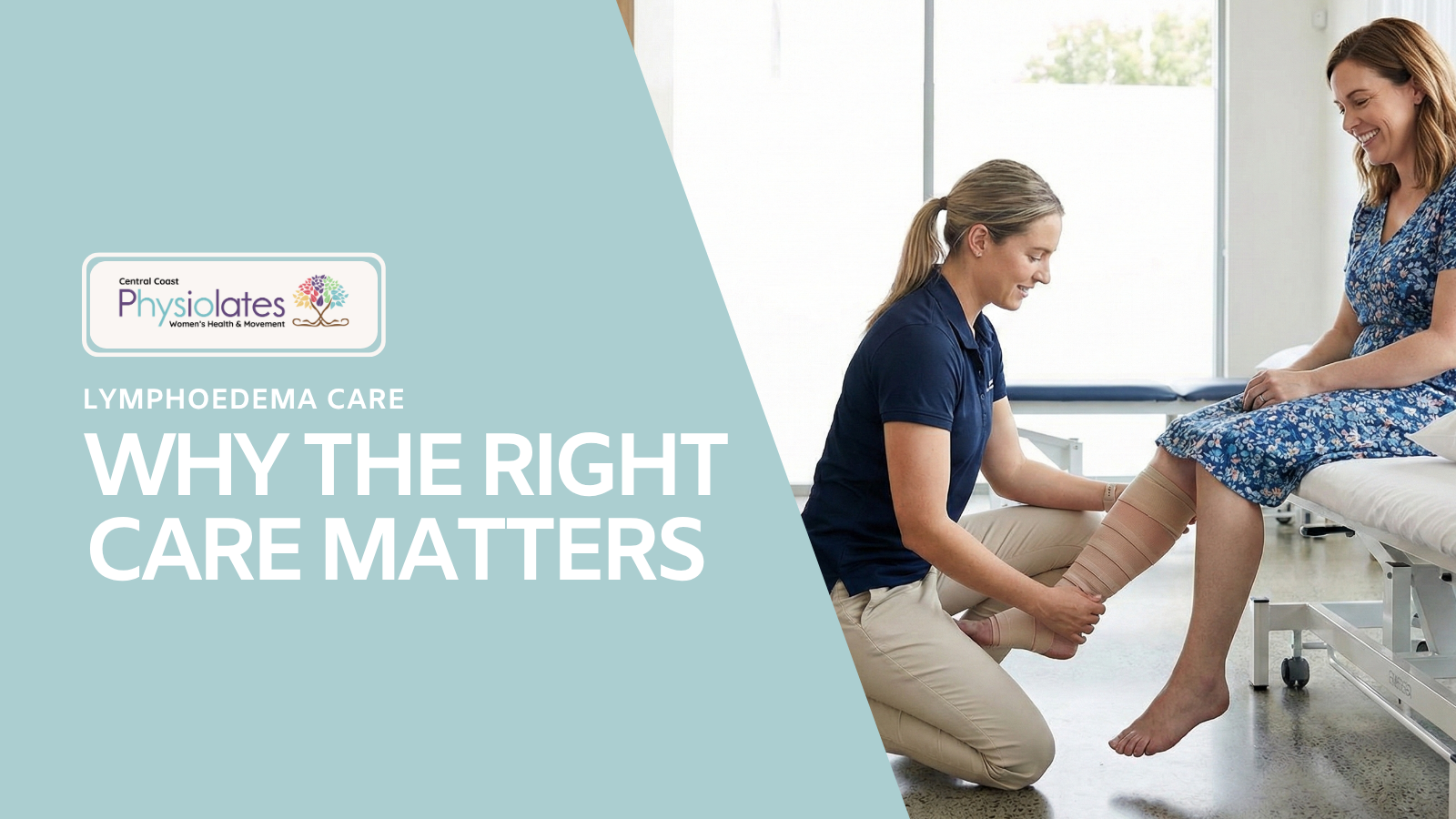
- Compression therapy (prescription, multi-layer bandaging, and garment selection).
- Therapeutic exercises and functional movement to optimise lymphatic flow.
- Skin care guidance to prevent infection (Cellulitis).
- Personolised movement regime
Specialised MLD Practitioners Provide MLD and Can Support CDT:
Highly skilled MLD-trained practitioners (like some remedial massage therapists) excel at the hands-on component. To manage chronic lymphoedema safely, they require collaboration for compression prescription, complex case staging, and ongoing risk management, which are outside the scope of non-registered health professions.
4. Our Commitment to Collaboration and Complete Care
At Central Coast Physiolates, our priority is safe, evidence-based care and working collaboratively within the local healthcare network.
A Note on Local Practitioners: We understand that skilled, MLD-trained practitioners (including many fantastic Remedial Massage Therapists) play a vital role in patient care. If your care is initiated or assessed by an Allied Health Lymphoedema Therapist, you can safely be referred back to a trusted MLD practitioner for ongoing maintenance MLD, especially once your condition is stable and monitored. We value these trusted relationships and aim to partner with practitioners who share a commitment to specialised care, like Hannah.
How Central Coast Physiolates Supports You
At Central Coast Physiolates, lymphoedema care is delivered by Allied Health professionals (Tara, Physiotherapist; Amee, Occupational Therapist) with advanced, ALA-aligned training in chronic swelling, movement, and women’s health.
- We provide the initial clinical assessment, diagnosis, staging, and compression prescription and personalised movement.
- We can provide intensive Complete Decongestive Therapy (CDT) for swelling reduction.
- We collaborate with your broader medical team.
- For patients with stable lymphoedema, we are happy to work with your trusted MLD practitioner to coordinate safe, ongoing maintenance care.
Frequently Asked Questions (FAQ)
- What is the difference between an ALA-Accredited Lymphoedema Therapist and a general massage therapist?
An ALA-Accredited Lymphoedema Practitioner has completed extensive training (135+ hours) in compromised lymphatic systems and Complete Decongestive Therapy (CDT), allowing them to manage chronic, complex swelling safely. A general massage therapist has limited MLD training focused on intact systems.
- Is Manual Lymphatic Drainage (MLD) enough for lymphoedema treatment?
No. Effective lymphoedema care requires Complete Decongestive Therapy—MLD, compression, exercise, and skin care. MLD should be part of a clinically managed plan.
- Can a highly-skilled MLD practitioner treat lymphoedema after cancer?
A highly-skilled MLD practitioner can provide maintenance MLD once the condition has been diagnosed, staged, and the treatment plan (including compression) has been established by an ALA-accredited Allied Health Professional. Safe, initial management and diagnosis must be done by a trained Allied Health Clinician.
- How does Central Coast Physiolates help with lymphoedema?
We provide the full spectrum of tailored CDT, including clinical assessment, compression prescription, MLD, movement rehabilitation, and long-term management delivered by an experienced Physiotherapist and Occupational Therapist.
Your Body Changes. Your Care Should Too.
From pregnancy and postnatal recovery to pelvic health, menopause and beyond, your body deserves care that makes sense for where you are now.
Join the Central Coast Physiolates newsletter for practical education, helpful resources and thoughtful guidance to help you better understand your body and feel more confident in your movement and health.
Your journey is important, and we'll never share your information.