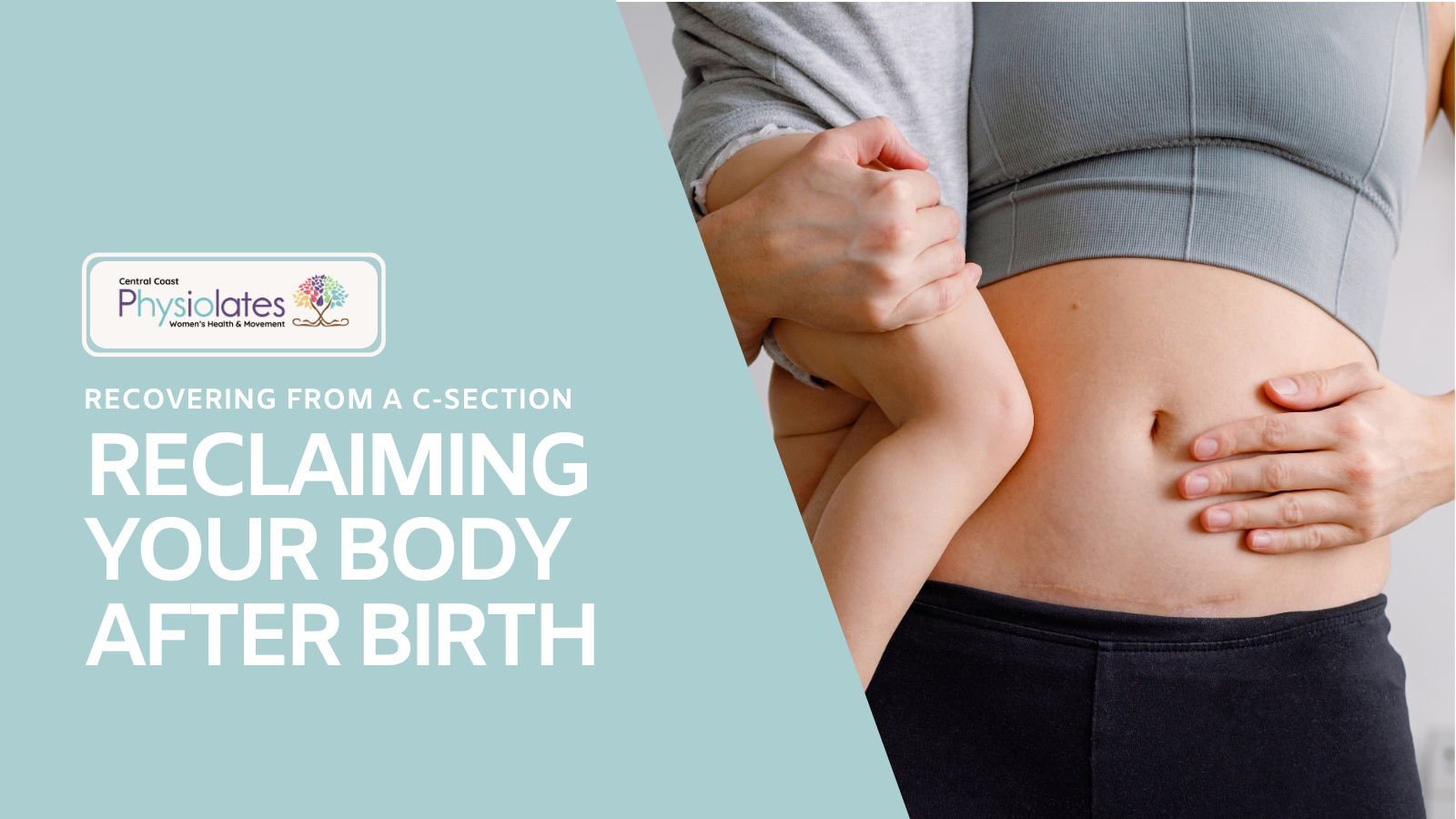
The Emotional & Physical Reality of C-Section Recovery: Reclaiming Your Body After Birth
Dec 23, 2025The journey into motherhood is a monumental shift—one that requires immense courage, deep emotional vulnerability, and a level of physical recovery that is often underestimated. For those who welcomed their baby via Caesarean section, this transition frequently unfolds within a complex, dual narrative.
Honoring the Emotional Landscape
The feelings surrounding a C-section are as diverse as the women who experience them. It is common to find yourself navigating a spectrum of emotions, including:
-
Relief and Gratitude: You may feel a profound sense of peace, believing you avoided a different kind of physical ordeal or trauma.
-
Quiet Grief: You may wrestle with subtle feelings of disappointment or a sense of “failure”, feeling as though your body did not perform the way you expected.
-
The Middle Ground: Many women hold both truths at once—relief that your baby is safe, alongside lingering trauma about how the birth eventuated.
Every emotion you feel is valid. There is no “right” way to process your birth story, despite the societal expectations and rigid timelines often placed on new mothers.
Acknowledging the Dual Recovery
To truly support healing, we must hold two equally important truths:
-
You have just given birth. This is a profound life transition that requires emotional integration and hormonal support.
-
You are recovering from major abdominal surgery. This is a physiological reality that requires specific clinical care, patience, and targeted rehabilitation.
These truths must be acknowledged together, yet addressed separately. True wellness is not just about “getting through” the first six weeks—it is about understanding how your body heals and how your heart processes change.
Reclaiming Your Body’s Story
Recovery after a C-section is not a linear checklist; it is a process of returning to a body that may feel unfamiliar. It means moving past what society says you should be doing and focusing on the reality of what your body has actually endured.
You are not just “fixing” a surgical site. You are acknowledging a major life event that happened to your body and through your body. Your body is not broken, but it has been altered, and it deserves more than a passive “wait and see” approach.
With the right guidance, you can move from guarding and protecting your midsection to feeling strong, connected, and capable again.
The Road Map: A Phase-by-Phase Guide
This guide is designed to respect your unique biology. It is not about rushing towards a deadline, but about honouring the physiological timeline of tissue healing and doing the right thing at the right time.
While some women may feel ready to progress sooner, guided support is best practice to ensure strength is built on a stable foundation, rather than compensatory patterns.
Professional guidance ensures that as you feel better, you are truly getting stronger—without placing hidden strain on your healing core and pelvic floor.
| Time Period | Phase Name & Focus | What You SHOULD Be Doing | What You MUST AVOID (Contraindications) |
|---|---|---|---|
| 0–6 Weeks | Protection |
Gentle walking; Breathing to reconnect with your floor; Splinting your scar when you cough/laugh. |
Lifting more than your baby; Crunches or anything that makes your stomach "dome" or "cone." |
| 6–12 Weeks | Restoration |
Professional core/DRA assessment; Starting gentle scar tissue work; Controlled, low-load core rehab. |
Running or jumping; Ignoring pain or pulling at the scar site. |
| 12–26+ Weeks | Rebuilding |
Functional screens for high-impact activity; Advanced core loading; Visceral Manipulation for deep tension.
|
Pushing through "failure signs" like leaking or pelvic heaviness; Assuming "6 months" means "fully healed."
|
Expert Care for the Whole Mother
You do not have to “just get on with it” alone. At CCPL, we recognise that recovery is both a physical necessity and an emotional journey.
Tara McKenzie combines the clinical precision of Women’s Health Physiotherapy with specialised techniques such as Scar Remediation and Visceral Manipulation. We do not just assess the scar—we see the woman.
This approach requires specific, phased rehabilitation that honours the whole person—mind, body, and emotional wellbeing. Your women’s health physiotherapist understands this and works with you to rebuild your new foundation with confidence and care.
C-Sections are not the easy way out
A C-section does not remove challenge—it replaces one set of physical demands with another. Recovery is complex because physical healing and emotional integration are deeply interconnected.
- The Physical Challenge
The surgery involves precise incisions through multiple tissue layers, directly impacting the deep core stabilising muscles—the Rectus Abdominis and Transverse Abdominis. This disruption complicates healing of Diastasis Recti Abdominis (DRA) and contributes to long-term pain.
Without treatment, scar tissue can interfere with the brain–body connection, making it difficult to reconnect with the muscles in this region. - The Scar
Scars may adhere to deeper fascial layers, causing pulling, numbness, and chronic pain. They can also act as a reminder of a stressful or emergency birth, leading to psychological distress and reduced self-acceptance.
Addressing physical restriction is not cosmetic—it is a powerful act of self-acceptance and reclaiming your body’s story. - Mentally — The VBAC Scenario
For many women, emotional processing extends into future pregnancy planning. Choosing between a Vaginal Birth After Caesarean (VBAC) or an Elective Repeat Caesarean (ERC) can carry external pressure, fear of failure, or a strong desire for a vaginal birth.
VBAC success rates vary widely (29%–82%), and an unsuccessful Trial of Labour After Caesarean (TOLAC) carries the highest complication risk. While your provider may offer guidance, this remains a deeply personal decision that requires weighing both risks and benefits.
This is your choice.
Conclusion
Recovering from a C-section is not about “healing in six weeks”—it is about rebuilding your body and integrating your emotional experience. Your recovery path is unique, valid, and worthy of care.
With the right guidance, prioritising physiotherapy, mindful progression, and self-compassion, you can reclaim your body and step confidently into motherhood.
You have navigated major surgery and become a mother—this deserves recognition, respect, and support.
Frequently Asked Questions
Q1: When should I start scar massage after a C-section?
Scar massage usually begins once the incision is fully healed and medically cleared, typically around 6–8 weeks postpartum. Early, appropriate scar mobilisation helps prevent adhesions, improve sensation, restore movement, and reconnect with deep core muscles. Timing and technique should always be individualised by a women’s health physiotherapist.
Q2: Why do I still have pain or numbness months after my C-section?
Ongoing pain, tightness, or numbness often indicates restricted scar tissue, altered nerve signalling, or unresolved core dysfunction. Adhesions can affect posture, movement, and bladder or bowel function. Targeted physiotherapy and scar remediation address root causes rather than masking symptoms.
Q3: Can a C-section cause long-term core weakness or diastasis recti?
Yes. A C-section directly impacts the abdominal wall and deep stabilising muscles, increasing the risk of prolonged core weakness and delayed DRA healing. Without proper rehabilitation, this may contribute to back pain, pelvic floor dysfunction, and reduced exercise tolerance.
Q4: Is emotional distress after a C-section normal?
Absolutely. Emotional responses may include relief, grief, disappointment, or trauma—particularly following emergency surgery. These feelings are valid and common. Addressing both physical and emotional recovery is key to restoring confidence and body trust.
Q5: How do I know when I can return to running or high-impact exercise?
Readiness is based on function, not time alone. Most women require at least 12 weeks before assessment. Clearance depends on core strength, pelvic floor control, scar mobility, and load tolerance. Warning signs—such as leaking, heaviness, pain, or abdominal bulging—indicate the need for further rehabilitation before progressing.
Your Body Changes. Your Care Should Too.
From pregnancy and postnatal recovery to pelvic health, menopause and beyond, your body deserves care that makes sense for where you are now.
Join the Central Coast Physiolates newsletter for practical education, helpful resources and thoughtful guidance to help you better understand your body and feel more confident in your movement and health.
Your journey is important, and we'll never share your information.